Platform Fees vs Fund Fees: The Real Cost of Investing in the UK
Two fees hit every pound you invest — the platform's cut and the fund's own charge — and most investors only ever check one of them. Here's how to find both and cut them down.
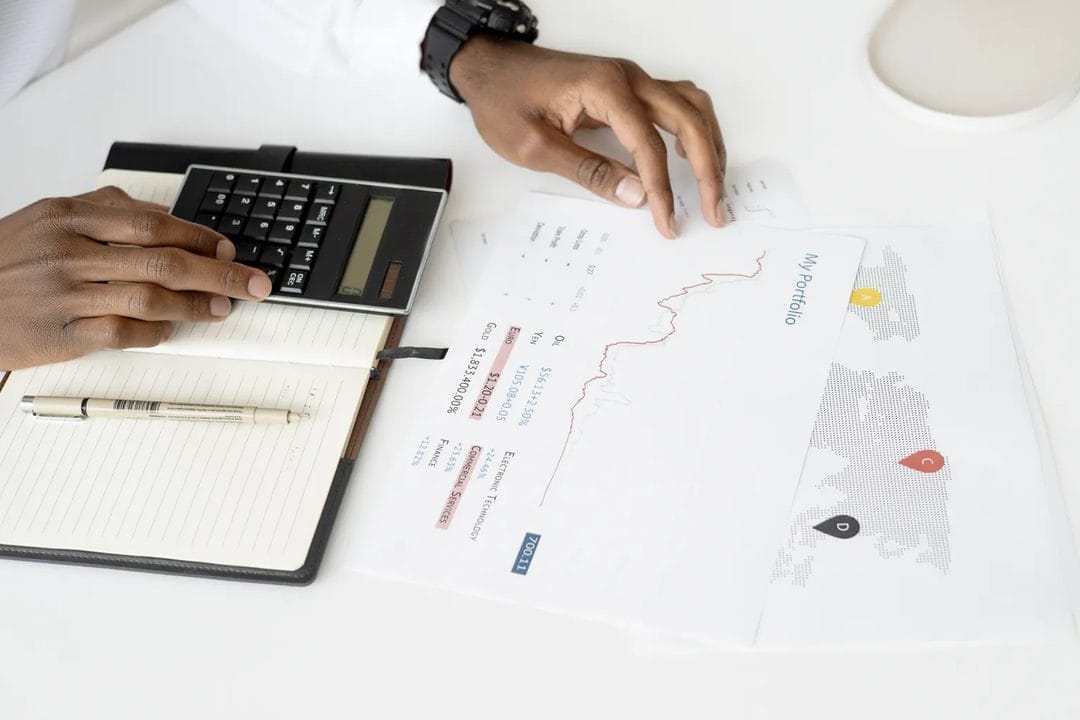
Open your investment platform's annual statement and you'll find one fee, clearly labelled, sitting right there in the summary. What you won't find on that same page is the second fee — the one baked into the fund itself, quietly shaving a slice off your return before it ever reaches your account. Most investors know they're paying something. Very few can tell you the actual combined number, and fewer still have ever checked whether it's competitive.
That gap matters more than most people assume. A platform fee and a fund's ongoing charge look like rounding errors individually — half a percentage point here, a quarter there — but they compound in exactly the same direction your returns do, just in reverse. Get the combination wrong and you can spend two decades quietly funding someone else's business model instead of your own retirement.
Two fees, two different jobs
The platform fee pays for custody: holding your shares and fund units, running the ISA or SIPP wrapper, handling the paperwork with HMRC, and giving you the app or website you log into. It's charged by the likes of Hargreaves Lansdown, AJ Bell, Fidelity, interactive investor and Vanguard Investor, and it comes in two broad shapes. Percentage-based platforms take a cut of your total assets, typically somewhere in the 0.25%–0.45% range for funds, often with a cap once you hold shares or ETFs directly. Flat-fee platforms charge a fixed monthly amount instead — commonly in the region of £10–£15 a month — regardless of whether you're sitting on £20,000 or £400,000. Neither model is inherently better; the crossover depends entirely on your balance, and a platform that's cheap for a £15,000 starter ISA can easily be the expensive choice once that same pot reaches six figures. Read the fee schedule the way you'd read a mortgage offer, not the marketing page — the number that matters is buried in a PDF, not the homepage headline.
The fund fee is a separate animal entirely, and it exists whether you use a platform or not. It's the ongoing charges figure (OCF) the fund manager deducts to run the thing — pay analysts, cover trading costs, keep the lights on. A plain global index tracker typically runs an OCF somewhere between 0.05% and 0.22%. An actively managed fund, where a human is picking stocks and trying to beat that index, usually sits between 0.75% and 1.5%, and some specialist or multi-manager funds go higher still.
Why the two numbers get confused
Nobody shows you the combined figure by default.
Ask most investors what they pay in total fees and you'll get the platform percentage — because that's the number that appears on the statement, deducted visibly every quarter. The fund's OCF is deducted internally before the price you see is even quoted, so it never shows up as a line item you actively notice leaving your account. Add a 0.35% platform fee to a 1.1% active fund and you're paying 1.45% a year before you've made a single trading decision. Swap that same fund for a 0.12% tracker on the same platform and the total drops to 0.47% — less than a third of the original cost, for exposure to broadly the same asset class.
What fee drag actually costs you over time
A percentage point sounds trivial when you're looking at a single year's statement. It stops sounding trivial once you compound it. Industry modelling on fee drag consistently shows that a persistent 0.5–1 percentage point gap in annual costs, held over a 25–30 year investing horizon, can eat somewhere in the region of a fifth to a third of your final pot — not because the fee itself grows, but because every pound it removes early is a pound that never gets the chance to compound for the following two decades. On a portfolio building toward six figures by retirement, that's not a rounding error. That's a difference measured in tens of thousands of pounds, sitting entirely on the cost side of the ledger rather than the performance side. And it's a gap you pay whether markets rise or fall that year, which is precisely why it deserves more attention than the daily price swings most investors actually lose sleep over.
None of this means every actively managed fund is dead weight, and it's worth saying that plainly because the tracker-only argument gets oversold. A handful of investment trusts with genuine, hard-to-replicate expertise — specialist small-cap Japan mandates, niche biotech, certain infrastructure trusts — have delivered enough net-of-fee outperformance over long stretches to justify their cost. But that's the exception you go looking for with evidence, not the default assumption you start from. For the vast majority of a portfolio, the burden of proof sits with the expensive option, not the cheap one.
The transaction costs nobody mentions
Beyond the platform fee and the OCF, there's a third cost that catches people out: dealing charges. Fund trades are usually free or bundled into the platform fee, but buying and selling individual shares or ETFs typically costs somewhere between £3 and £12 per trade, and that adds up fast if you're a frequent trader or you're drip-feeding small monthly amounts into individual stocks rather than a fund. If you're investing every month, check whether your platform offers a reduced "regular investing" dealing charge — most do, and it's usually a fraction of the standard rate. Ignore this and a £50 monthly ETF purchase with a £10 flat dealing fee is quietly handing 20% of that contribution straight to transaction costs before it's even invested.
Watch the cap, not just the percentage
Several percentage-based platforms cap the fee once you hold shares, investment trusts or ETFs rather than open-ended funds — Hargreaves Lansdown and AJ Bell both work this way, charging the uncapped percentage on funds but stopping the fee at a fixed annual ceiling once the same money sits in shares or ETFs. That distinction is easy to miss and expensive to ignore: a £150,000 SIPP held entirely in open-ended funds pays the uncapped rate on the full balance, while the same £150,000 rebuilt around ETFs tracking the identical indices can hit the cap and pay a fraction as much for near-identical market exposure. If you're using funds purely out of habit rather than because you specifically need the structure — automatic dividend reinvestment, fractional units for small regular contributions — check whether the ETF equivalent on your platform crosses into capped territory.
Which platform model actually wins
Here's where you need to stop hedging and make a call based on your own numbers. If your portfolio sits above roughly £50,000, a flat-fee platform is almost always the cheaper option — a fixed £120–£180 a year beats 0.35% of £50,000 (£175) and the gap only widens as the balance grows, since the flat fee doesn't scale up with your success. Below that threshold, percentage-based platforms often work out cheaper in absolute terms, particularly while you're still building the pot through smaller monthly contributions. Run the actual comparison against your current balance rather than assuming either model is universally better — the crossover point moves depending on how many separate trades you make and which specific platform you're comparing against.
On the fund side, the call is simpler: for most of a core portfolio, an accumulating global index tracker on the cheapest platform available to you is the right default, not the compromise choice. Skip active funds charging north of 1% unless you can point to specific, sustained evidence that the manager has beaten their benchmark net of fees over a full market cycle — a strong three-year run during a bull market doesn't count as that evidence.
How to actually check what you're paying
Most platforms now publish a combined cost figure somewhere in your account settings or annual statement, usually labelled something like "total cost of investing" — find it and read it, rather than assuming the headline platform percentage is the whole story. If your platform doesn't surface that number clearly, add the platform fee to the weighted average OCF of your holdings yourself; it's five minutes with a calculator and it's the single most useful audit you can run on your own portfolio this year. Do it once a year, ideally around the time you review your ISA allowance for the new tax year, and switch providers if the maths has stopped working in your favour — platform transfers within an ISA wrapper are generally free and don't trigger a capital gains event, so there's rarely a good reason to stay loyal to an underperforming fee structure out of inertia.